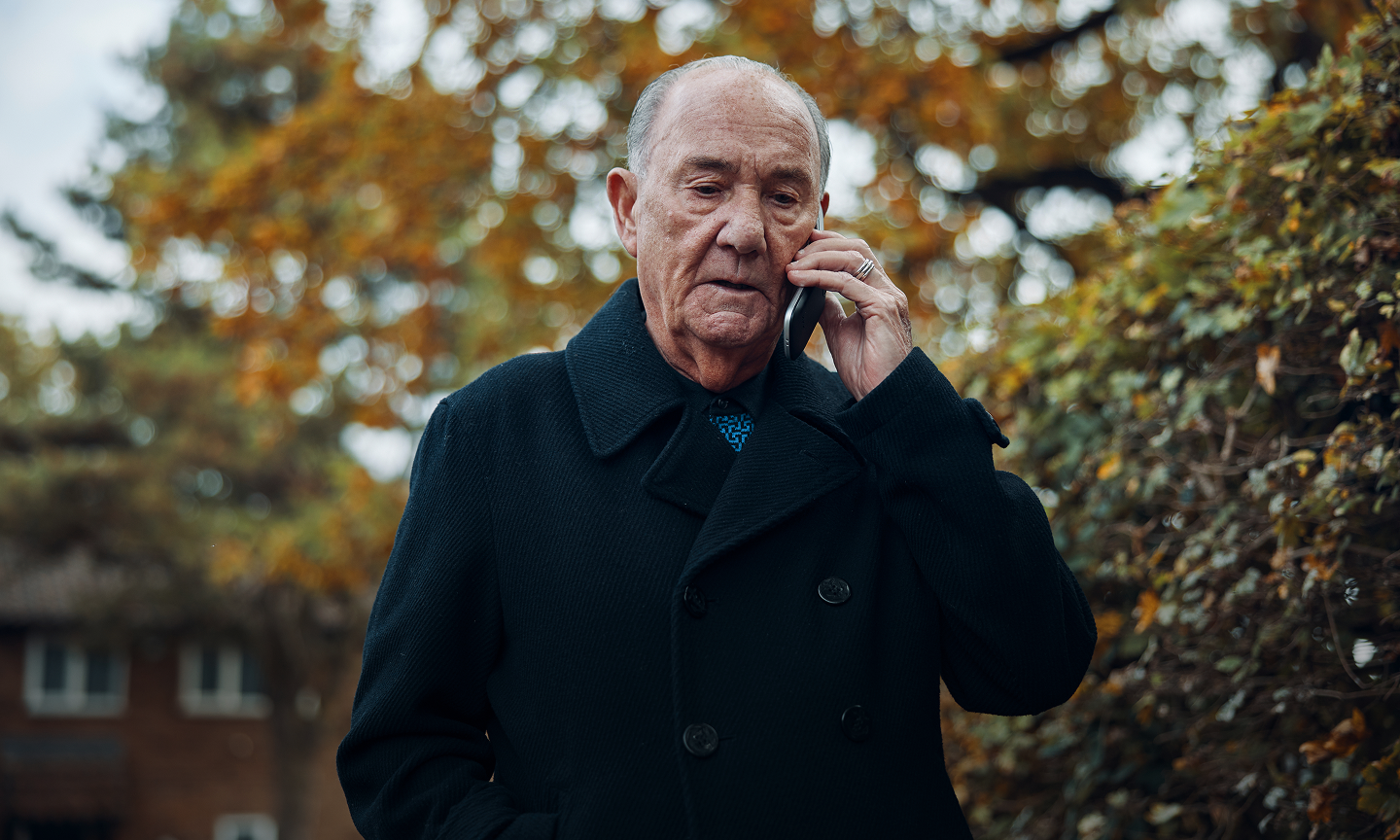
When to See a Doctor
Leaving hospital after a COPD-related stay can feel like a relief, but also a little overwhelming.
You’re not alone. Your healthcare team is there to support you as you continue your recovery and manage your COPD at home.1
What happens after you go home?
Once you’re home, you’ll carry on your treatment and begin your recovery with the help of a self-management plan. This is a written plan to help you manage your COPD after discharge.1
Things included in your care plan may include:1
- A review of your medication
- A check of your inhaler technique
- A COPD self-management plan
- A Rescue Pack of medicines
- Support to stop smoking (if needed)
- An assessment for pulmonary rehabilitation (PR)
You will also be offered a phone call within 72 hours of discharge from someone in your healthcare team to check how you are doing. If you agreed to this call but didn’t receive it, contact your local GP surgery.1
Will I see my doctor after discharge?
When you receive a review will depend on the services that are available in your local area; however, it is recommended that you have a review of your COPD in the first 4 weeks after you are discharged. You will also be advised about any follow-up appointments that may be required, and where these will be.2
Use your discussion list to help you prepare for this appointment.
Your appointment will usually be with your GP or COPD nurse, and they may check the following with you:2
- Check your symptoms
- Make sure you’re on the right medication
- Go over your inhaler technique
- Answer any questions you may have
What if I have a COPD flare-up at home?
Your self-management plan will help guide you if your symptoms suddenly get worse. This plan may include a Rescue Pack of medicines (antibiotics and/or steroids) to keep at home.3,4
Your plan should tell you:3–5
- What to do if you feel you're starting to experience a flare-up
- When to start steroids or antibiotics
- What symptoms to watch for (such as your phlegm changing colour or becoming stickier)
- When to contact your healthcare team for more help
If you’re unsure about your plan, contact your healthcare team and ask for a review.

I’ve used my Rescue Pack – what should I do?
If you’ve had to use your Rescue Pack:4
- Let your GP practice know
- Whether you were treated at home or in hospital for a flare up, you should have a follow-up appointment with your GP when you feel better
- If you use three or more courses of oral steroids or antibiotics within a year, you should be offered a review to check that you are getting the right care
I’m unsure how and when to take my medication
If you’ve been prescribed a mix of inhalers and tablets, it’s easy to get confused — especially after a hospital stay. You’re not alone in this.

Asthma + Lung UK has a free COPD self-management plan you can use to help track what you’re taking and when.5
Download the planYou can even take it to your next appointment and fill it in with your healthcare team.
Is my COPD medication still working?
If your symptoms are getting worse or you’re using your Rescue Pack more often, it could be time to review your treatment. A few things to check first:3
Are you using your inhaler correctly?
Even a small change in your technique can make a big difference. Ask your doctor, nurse or pharmacist to check your technique — ideally once a year, or more often if needed.
Still not sure?
Book a review to talk about your symptoms and discuss other treatment options. Your discussion list can help guide the conversation.
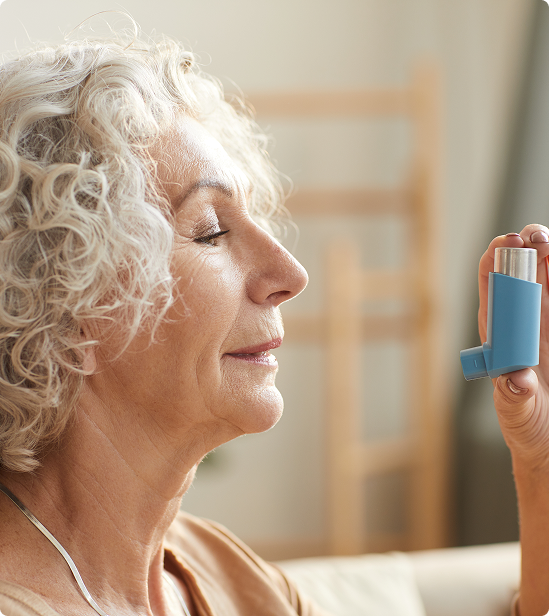
I’m unsure about my COPD inhaler technique
There are different types of inhalers and each one works slightly differently:3

Dry powder inhalers
Breathe in as hard as you can and then hold your breath for 10 seconds

Soft mist inhalers
These turn liquids into a mist that you breathe in.

Pressurised metered dose inhalers
These produce a puff of medication like an aerosol. You should use a slow deep breath in and hold it for up to 10 seconds.
If you’re unsure about which inhaler you have or how to use it, book an appointment with your healthcare team and ask for a demonstration. You should never feel embarrassed to ask.
COPD is getting in the way of my daily life
Living with COPD can affect more than just your breathing. If you’re finding daily tasks harder or feel low, anxious or isolated. Then:
It’s time to ask for support:6,7
- Talk to your healthcare team
- Reach out to friends or family
- Join a COPD support group to connect with others
- Take part in pulmonary rehabilitation, which can help both physically and emotionally
You don’t have to face COPD alone.
I want to cut down or stop smoking
Quitting smoking is one of the best things you can do for your lungs. It’s not always easy — but you don’t have to do it alone.8

Your doctor, nurse or pharmacist can support you with:8–11
- Nicotine replacement therapies (patches, gum, lozenges, sprays)
- Stop-smoking medication
- Referral to a local Stop Smoking Service
- Advice on dealing with triggers and habits
With the right treatment and support, you’re three times more likely to quit successfully than going it alone. For more information about smoking and COPD, visit our information page.10
Learn more about COPD & SmokingI’d like more advice on living with COPD
Need to prepare?
Book a review with your doctor, nurse or pharmacist. You can also complete the COPD Assessment Test (CAT) to help guide the conversation. Your discussion list is there to support you.
Find support
If you’re looking for more information on support groups that are available for you, visit our Help and Support page.
Abbreviations:
References:
- British Thoracic Society. COPD Discharge Care Bundle. Available at: https://www.brit-thoracic.org.uk/document-library/quality-improvement/copd/copd-discharge-care-bundle/. Accessed November 2025.
- NHS. Exacerbation of COPD and what to expect after discharge. Available at: https://www.gloshospitals.nhs.uk/media/documents/Exacerbation_of_COPD_and_what_to_expect_after_discharge_GHPI1644_06_24.pdf. Accessed November 2025.
- Asthma + Lung UK. Medications for COPD. Available at: https://www.asthmaandlung.org.uk/conditions/copd-chronic-obstructive-pulmonary-disease/medications-copd. Accessed November 2025.
- Asthma + Lung UK. Managing COPD flare-ups. Available at: https://www.asthmaandlung.org.uk/conditions/copd-chronic-obstructive-pulmonary-disease/managing-copd-flare-ups. Accessed November 2025.
- Asthma + Lung UK. COPD Management Plan. Available at: https://shop.asthmaandlung.org.uk/collections/health-advice-resources/products/copd-self-management-plan. Accessed November 2025.
- NHS. COPD Treatment. Available at: https://www.nhs.uk/conditions/chronic-obstructive-pulmonary-disease-copd/treatment/. Accessed November 2025.
- NHS. Living with COPD. Available at: https://www.nhs.uk/conditions/chronic-obstructive-pulmonary-disease-copd/living-with/. Accessed November 2025.
- Asthma + Lung UK. Why is smoking bad for me? Available at: https://www.asthmaandlung.org.uk/living-with/stop-smoking/why-is-it-bad. Accessed November 2025.
- NHS. Stop smoking treatments. Available at: https://www.nhs.uk/conditions/stop-smoking-treatments/. Accessed November 2025.
- Asthma + Lung UK. How to quit smoking – the best ways to quit. Available at: https://www.asthmaandlung.org.uk/living-with/stop-smoking/quit. Accessed November 2025.
- NHS. Understand your smoking triggers and cravings. Available at: https://www.nhs.uk/better-health/quit-smoking/staying-smoke-free/understand-your-smoking-triggers-and-cravings/. Accessed November 2025.