COPD Diet
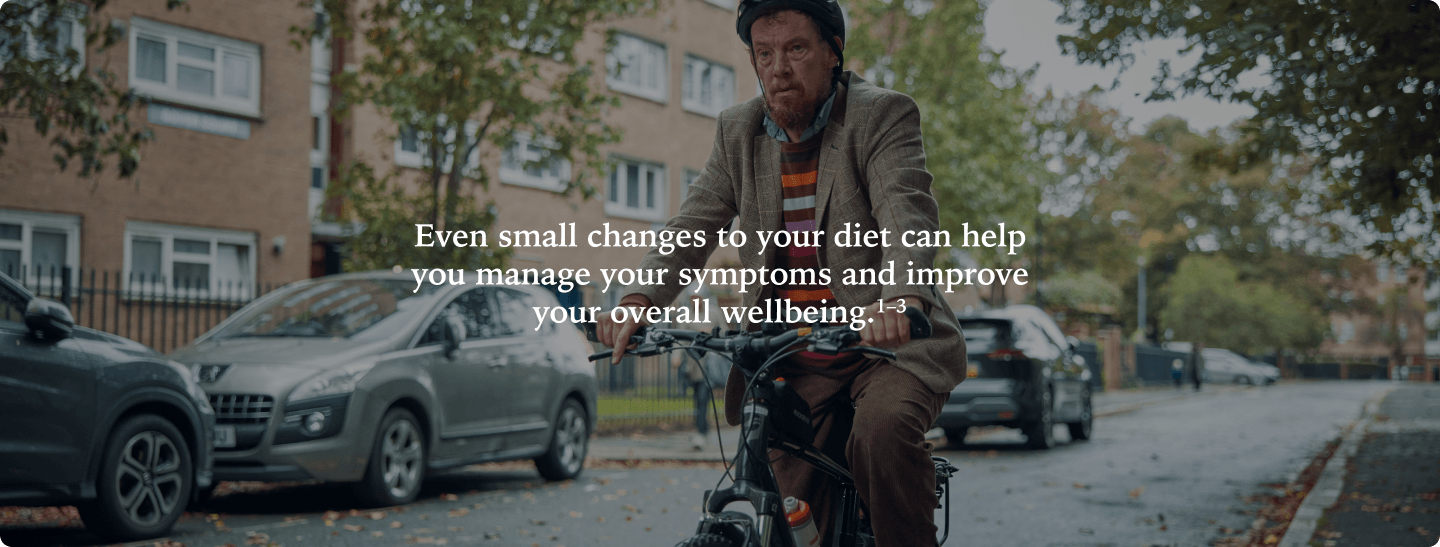
What you eat can make a big difference when you're living with COPD.1-3
A healthy, balanced diet helps your body fight infections, keeps your lungs healthy, and gives you the energy you need to feel your best day-to-day.1–3

Why nutrition matters when you have COPD
Eating well is important for everyone, but when you have COPD, it’s part of managing your condition. The right nutrients can:1,2

Support your immune system

Help your body fight off chest infections

Keep your muscles strong, including the muscles you use to breathe

Give you energy to stay active

Help you maintain a healthy weight
Being underweight or overweight can make it harder to breathe and increase your risk of other health issues.1–3
Weight and COPD: finding the right balance
If you’re overweight
Carrying excess weight, especially around your chest and stomach, can make breathing more difficult. It can also increase your risk of conditions like diabetes or heart disease.2,3

If you’re underweight
Being underweight can weaken your muscles – including the ones that help you breathe. You may also feel tired, have less energy, and be more prone to infections.2
If your weight has changed or you’re unsure what’s healthy for you, speak to your doctor, nurse or pharmacist. They can help you find the right approach for your needs.
You can also use the NHS BMI calculator to get an idea of whether your weight is in a healthy range.4
What does a balanced diet look like?
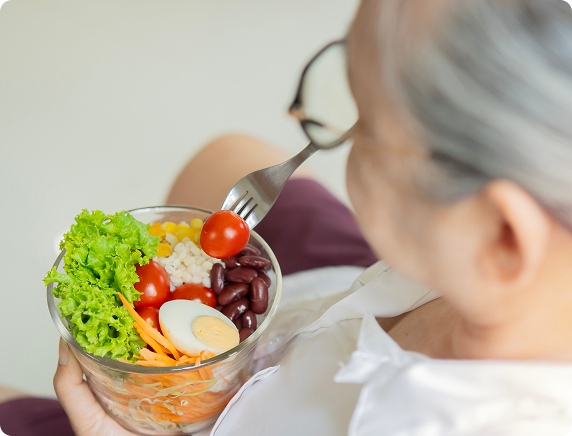
A healthy, balanced diet includes a variety of foods, so your body gets all the vitamins and nutrients it needs. You don’t need expensive ingredients or fancy recipes — just a few small changes can make a big difference.1,5
Here’s what to include in your meals:1,5

Fruits and vegetables
For vitamins and minerals to support your immune system

Starchy carbohydrates
Like wholegrain bread, brown rice or pasta for energy

Protein
From beans, eggs, fish, or meat to keep your muscles strong

Dairy or dairy alternatives
For calcium and vitamin D, especially if you take steroids, which increases the risk of weak bones or osteoporosis

Oils and spreads
High in energy, so use in small amounts
You can learn more about food groups in the NHS Eatwell Guide.


Managing unwanted weight loss with COPD
If you’re losing weight without meaning to, don’t ignore it. Many people with COPD find eating hard if they’re breathless, tired, or have a poor appetite — but not eating enough can weaken your muscles, lower your energy, and increase your risk of infection.2
Speak to your doctor if:2

You're losing weight without planning to
You're finding it hard to gain weight
You feel weak or have low energy
You may be referred to a dietitian, who can help you get more calories and protein into your meals. You may also be offered nutritional supplement drinks.
Quick tips to add more calories and protein to your meals2
- Add butter, margarine, ghee or oil
- Use full-fat milk, cream or coconut milk
- Add yoghurt or custard to desserts
- Be generous with cheese, nuts and seeds
- Use nut butters like peanut butter or tahini
- Snacking on foods like avocado or granola
Tips to help you gain weight2
- Eat small meals often, rather than three large meals
- Plan ahead – cook more on a day you feel well and freeze extra portions
- Don’t skip meals – try setting a reminder
- Choose high-calorie foods and enrich meals using the tips above
- Avoid drinking lots of fluid just before a meal – it can make you feel full
- Try light exercise (if you’re able) – it can help boost your appetite
Ask for help if you need it
It’s OK to ask family or friends to help with shopping or cooking. You could also check if there are local support services or voluntary groups in your area who can assist.8
Abbreviations:
COPD, chronic obstructive pulmonary disease.
References:
- Asthma + Lung UK. Eating well with a lung condition. Available at: https://www.asthmaandlung.org.uk/living-with/healthy-eating/eating-well. Accessed November 2025.
- Asthma + Lung UK. Staying a healthy weight. Available at: https://www.asthmaandlung.org.uk/living-with/healthy-eating/weight. Accessed November 2025.
- World Health Organization (WHO). Obesity and overweight. Available at: https://www.who.int/news-room/fact-sheets/detail/obesity-and-overweight. Accessed November 2025.
- NHS. Obesity - Diagnosis. Available at: https://www.nhs.uk/conditions/obesity/diagnosis/. Accessed November 2025.
- NHS. The Eatwell Guide. Available at: https://www.nhs.uk/live-well/eat-well/food-guidelines-and-food-labels/the-eatwell-guide/. Accessed November 2025.
- Healthline. How long can you live without water? Available at: https://www.healthline.com/health/food-nutrition/how-long-can-you-live-without-water. Accessed November 2025.
- NHS. Water, drinks and your health. Available at: https://www.nhs.uk/live-well/eat-well/food-guidelines-and-food-labels/water-drinks-nutrition/. Accessed November 2025.
- Asthma + Lung UK. Help with eating and drinking. Available at: https://www.asthmaandlung.org.uk/living-with/healthy-eating/help. Accessed November 2025.